
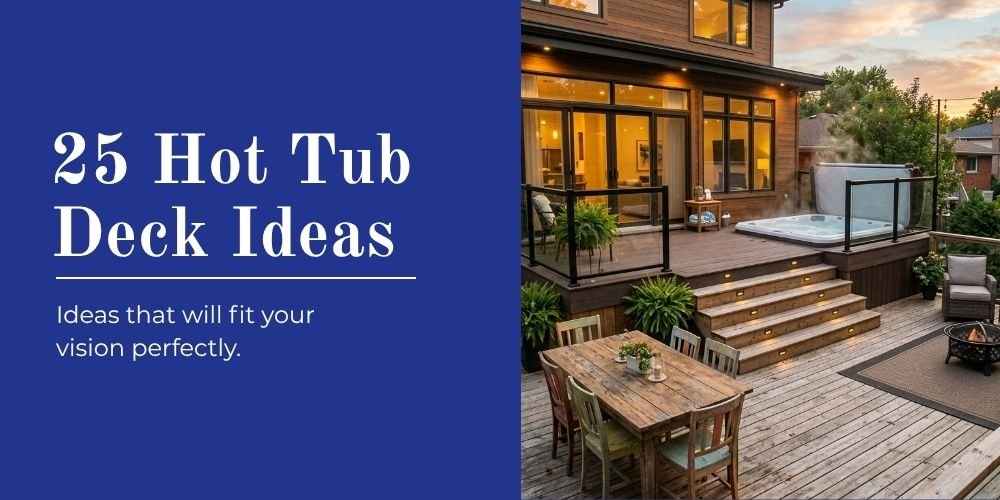
You’ve dreamed about it. Stepping outside on a crisp evening, slipping into warm, bubbling water, and staring up at the stars right in your own backyard. A hot tub deck can make that dream a daily reality, and the good news? There has never been a better time to build one.
In this guide, we’ve rounded up 25 of the best hot tub deck ideas across every style, size, and budget, from simple weekend builds to jaw-dropping luxury installations.
Whether you’re starting from scratch or upgrading an existing deck, there’s an idea here that will fit your vision perfectly.
25 Hot Tub Deck Ideas for Every Style & Budget
We’ve organized these ideas by concept and style so you can quickly find the look that matches your backyard and personality. Each idea includes key features, best materials, and who it’s perfect for.
Built-In & Recessed Hot Tub Decks
The ‘built-in’ look is the gold standard for hot tub decks. When a hot tub is recessed or inset flush with the deck surface, it creates a seamless, resort-like aesthetic that looks like it was always meant to be there.
1. Flush-Inset Built-In Deck
Popular | High-End | Low Maintenance
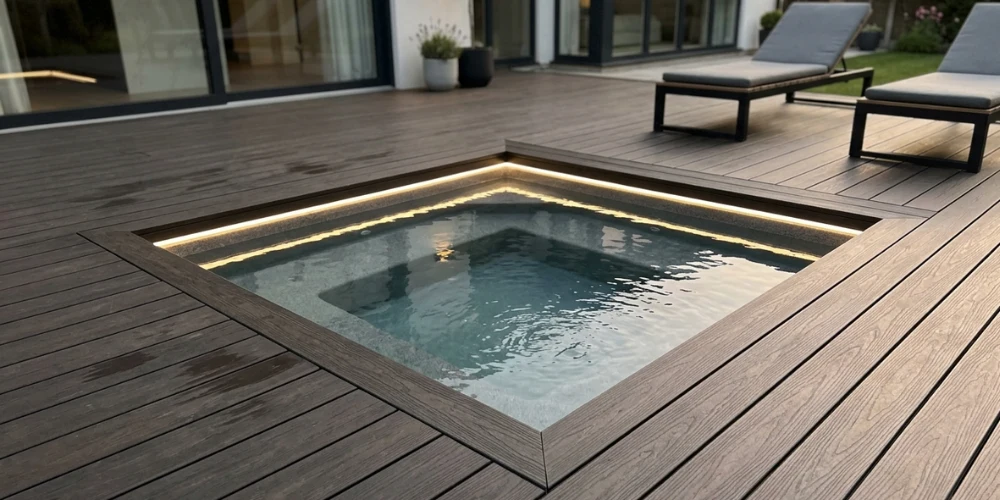
Sink your hot tub directly into the deck so the rim sits perfectly level with the decking surface. The result is an ultra-clean, minimalist look that feels like an infinity pool. Best with composite or hardwood decking, and LED lighting around the tub edge.
2. Wraparound Wood Surround
Budget-Friendly | DIY-Friendly | Natural Wood
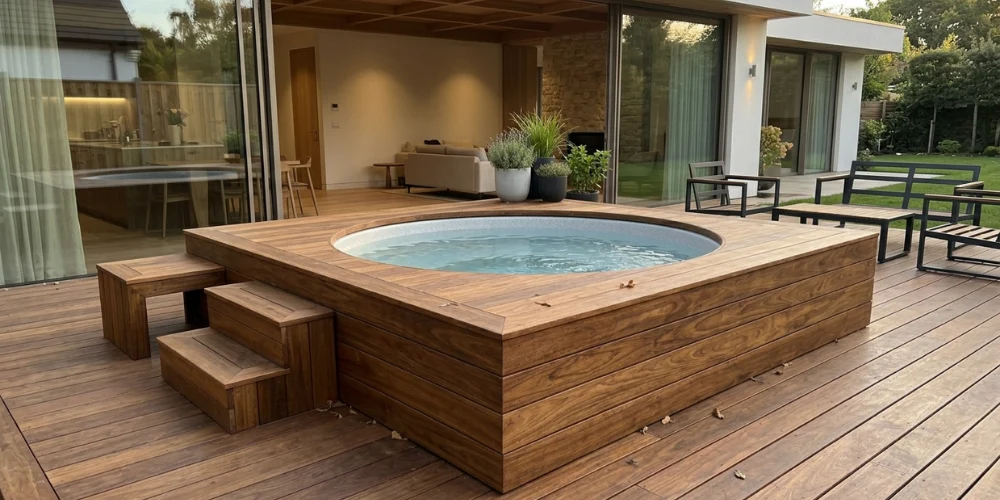
Build a custom wood surround that wraps all four sides of your above-ground hot tub, matching the same deck boards. This gives an above-ground spa the appearance of a fully custom built-in, at a fraction of the cost. Ipe or Cumaru hardwood is ideal here.
3. Recessed Hot Tub with Mood Lighting
Luxury | Evening Vibes | WOW Factor
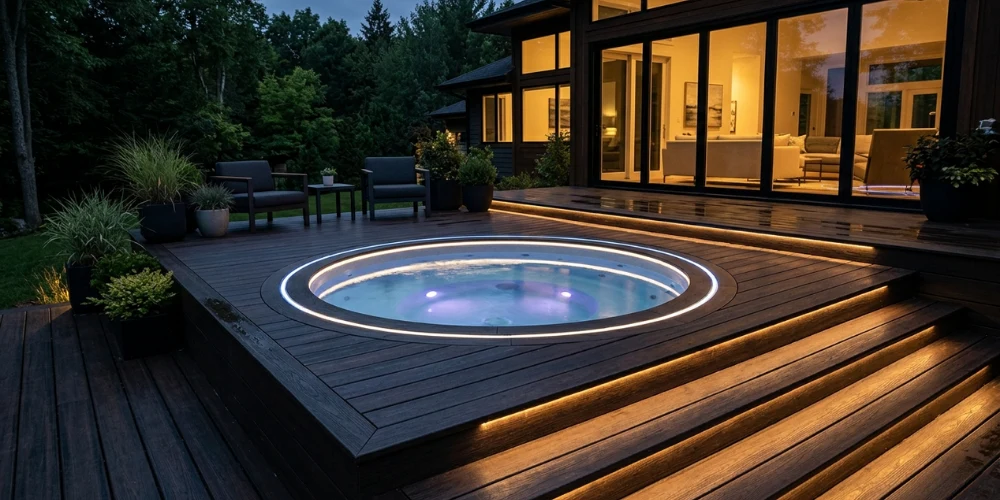
Take the flush-inset design to the next level with integrated LED lighting in the tub steps, deck risers, and around the water edge. Programmable color-changing LEDs create an ambiance that transitions from family soak to romantic evening effortlessly.
4. Deck + Stone Surround Combo
Two-Material | Upscale | Resort-Style
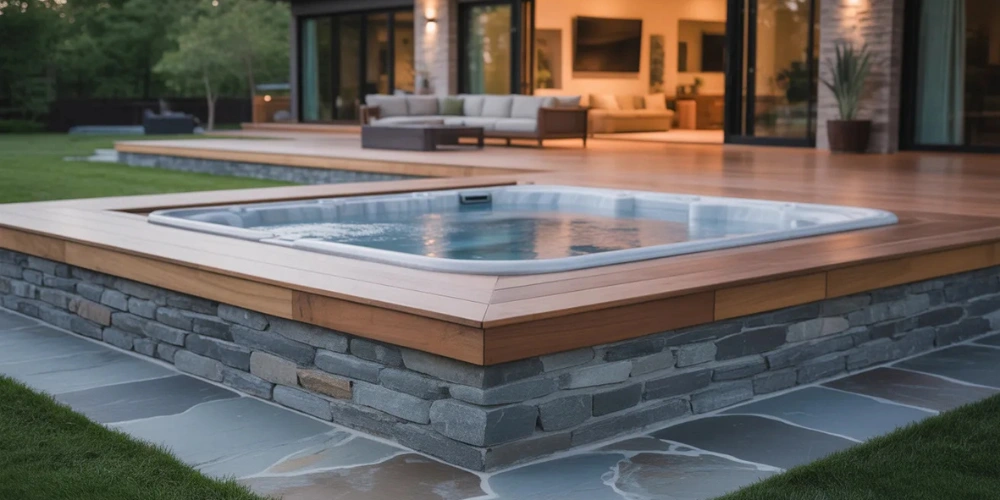
Blend natural stone (bluestone, slate, or flagstone) around the hot tub base with wood decking on the outer platform. The contrast of organic stone and warm wood creates a striking, high-end aesthetic.
Multi-Level Hot Tub Decks
Multi-level decks solve a key design challenge: how do you make a hot tub feel like the centerpiece of an outdoor space without it overwhelming everything else? The answer is levels, creating distinct zones for soaking, dining, and lounging.
5. Raised Platform Hot Tub Deck
Dramatic | Easy Entry | Focal Point
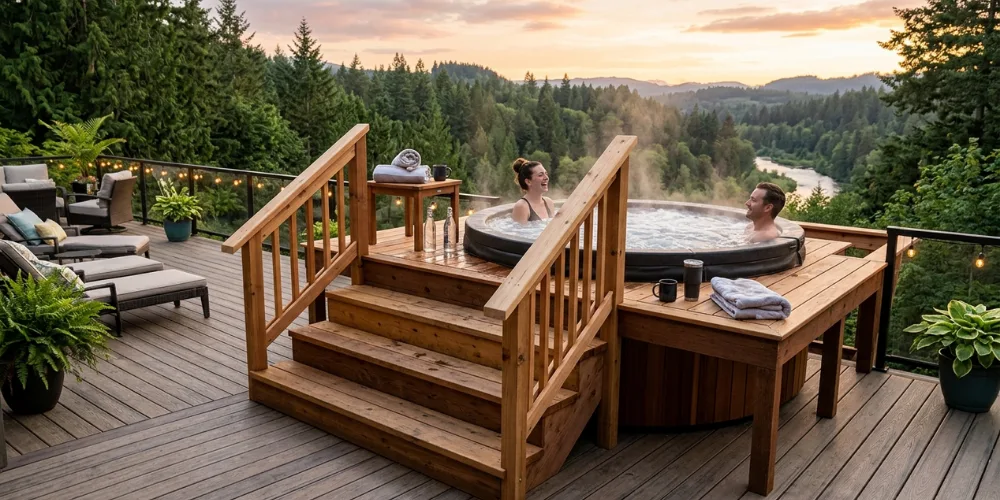
Elevate your hot tub on a raised platform (3–4 steps above the main deck) to create a dramatic spa-like elevation. This makes entering the tub easier, creates a visual focal point, and frames the hot tub as the centerpiece of your outdoor space.
6. Two-Level Deck with Dedicated Spa Zone
Family-Friendly | Entertainment | Zoned Design
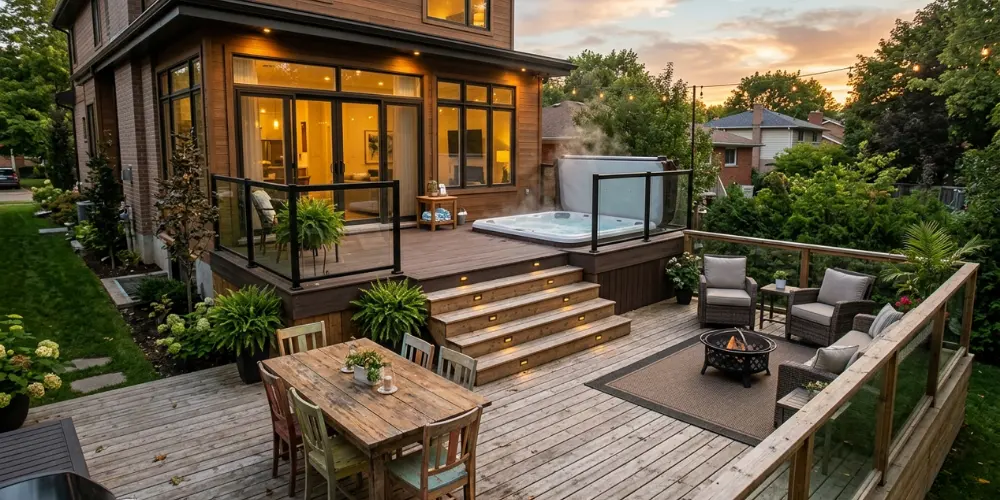
Place the hot tub on the upper level connected to the home, with a lower entertainment level — outdoor dining, fire pit, seating flowing below. This multi-level design defines each area’s purpose and makes your yard feel larger and more intentional.
7. Hillside Wraparound Deck
Sloped Yards | Scenic Views | Panoramic
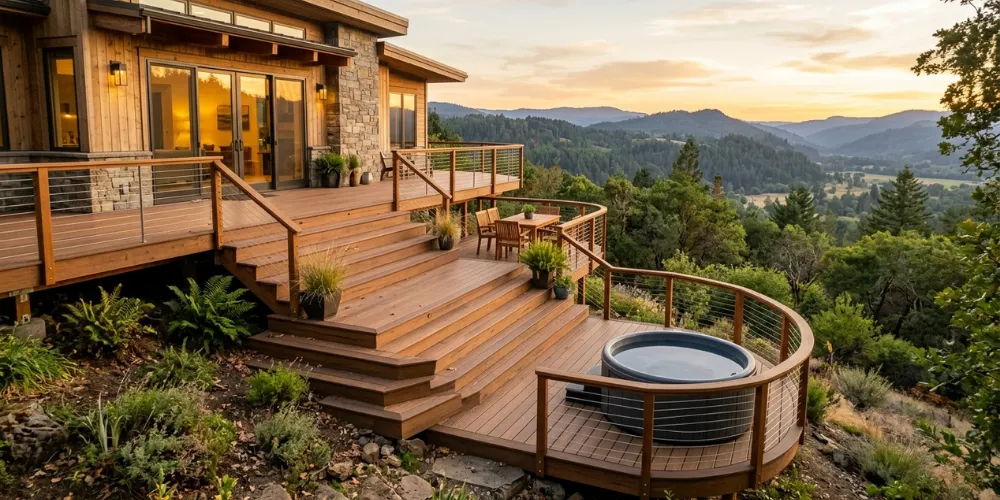
On sloped lots, a wraparound multi-level deck makes genius use of grade changes. Place the hot tub at the outer edge with panoramic views, while the higher inner deck connects to the home. Ideal for properties with scenic backdrops.
8. Pool + Hot Tub Multi-Level Deck
Resort Vibes | Pool Combo | Luxury
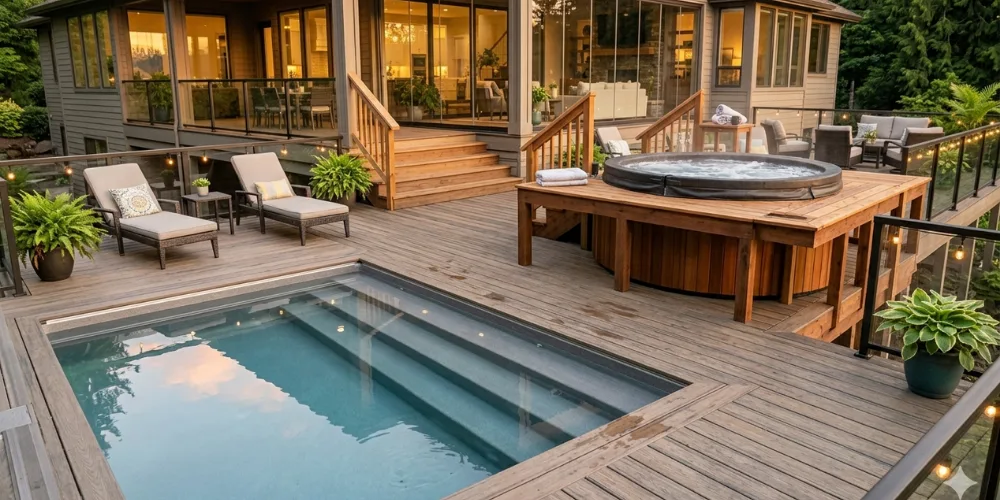
If you have (or plan to add) a pool, a connected multi-level deck that flows seamlessly between pool, hot tub, and lounge area creates a true backyard resort. Match decking materials throughout, add glass railings, and you have a showpiece space.
| PRO TIP: When building a multi-level deck, always ensure each level has its own structural support. A licensed structural engineer should review plans for any multi-level deck before you break ground. |
Natural & Rustic Hot Tub Deck Ideas
For homeowners who love the warmth of natural materials, rustic textures, and an organic connection to the outdoors, these ideas are a perfect fit.
9. Forest Hideaway Deck
Private | Natural | Zen
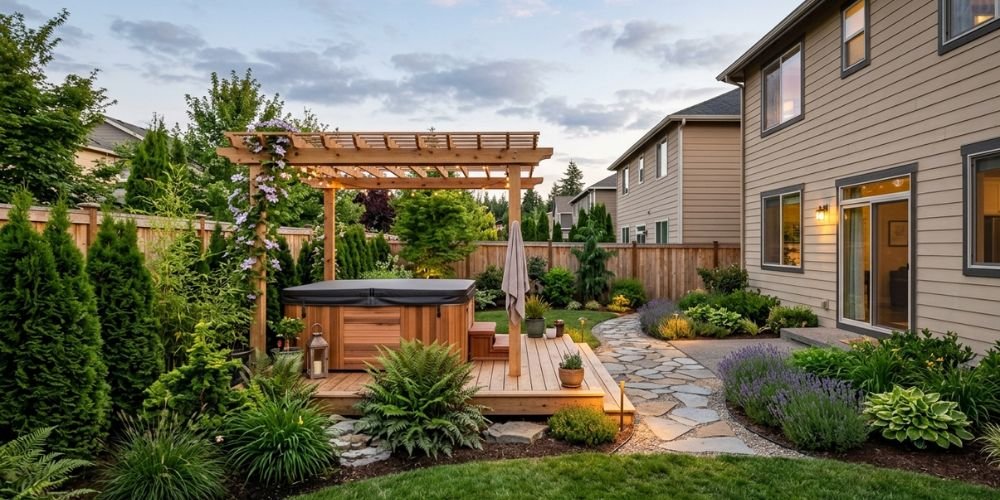
Surround a simple wooden deck and hot tub with dense mature plantings — ferns, arborvitae, bamboo, or ornamental grasses. The hot tub becomes a hidden retreat, discovered at the end of a narrow garden path. Add a simple cedar pergola overhead for a canopy effect.
10. Rustic Wood + Fieldstone
Mountain Style | Rustic Luxury | Two-Material
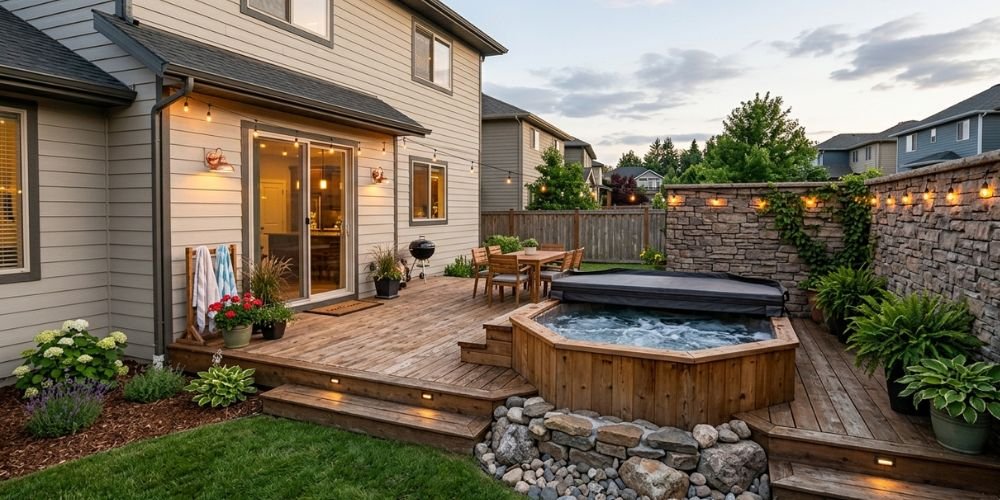
Combine rough-hewn wood decking with natural fieldstone or boulder accents around the hot tub base. Add a stacked stone privacy wall on one or two sides. This design evokes a mountain lodge atmosphere- timeless, warm, and completely natural feeling.
11. Japanese Zen Soaking Deck
Minimalist | Zen | Unique Style
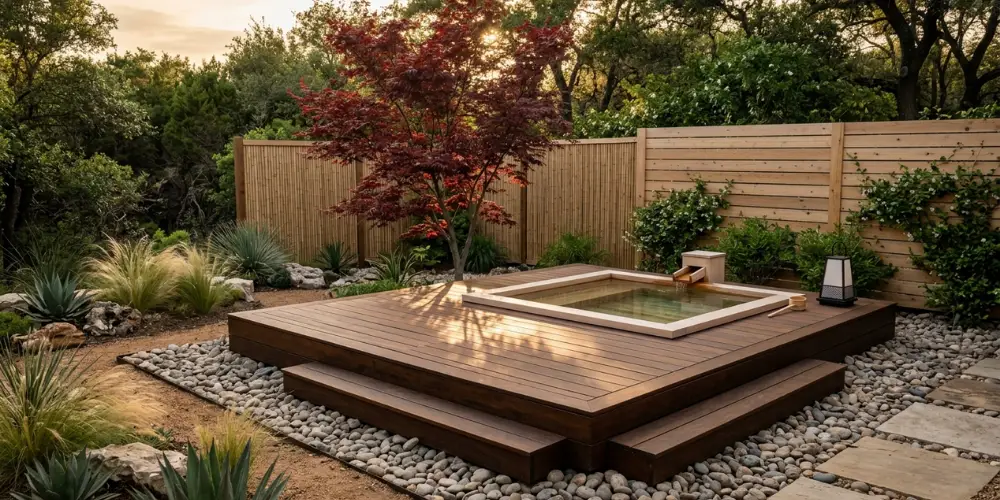
Draw inspiration from Japanese ofuro bath culture: a low, minimalist deck in Ipe or teak, surrounded by river stones, simple bamboo, and a single graceful Japanese maple. Restraint is everything here — fewer elements, maximum tranquility.
12. Tropical Oasis Deck
Tropical | Bali Vibes | Lush
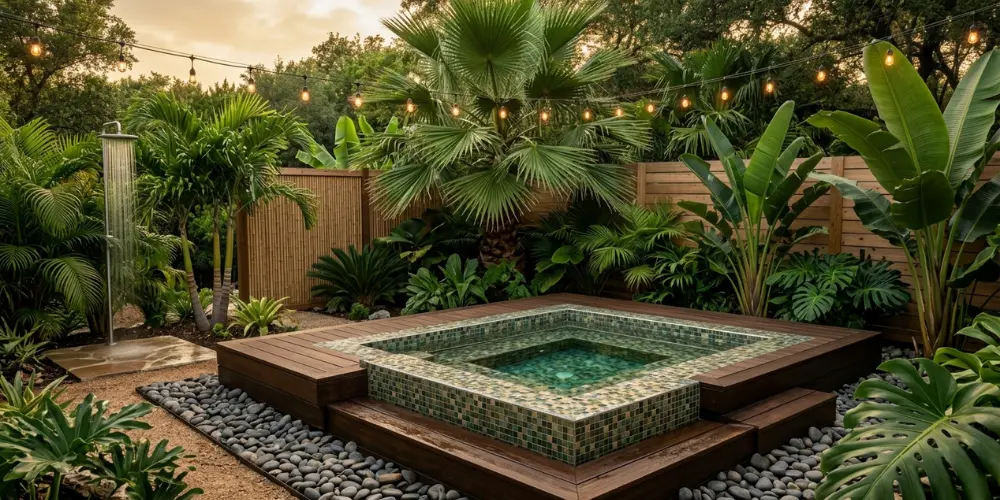
Think Bali resort. Large tropical plants, a teak or composite deck, a hot tub with mosaic tile accents, a bamboo privacy wall, and soft string lights overhead. Add a small outdoor shower for a true spa circuit.
Privacy-First Hot Tub Deck Designs
One of the most common complaints hot tub owners have after installation: ‘I wish I’d thought more about privacy.’ These designs put seclusion front and center without sacrificing style.
13. Three-Sided Privacy Wall Enclosure
Private | Enclosed Feel | Year-Round
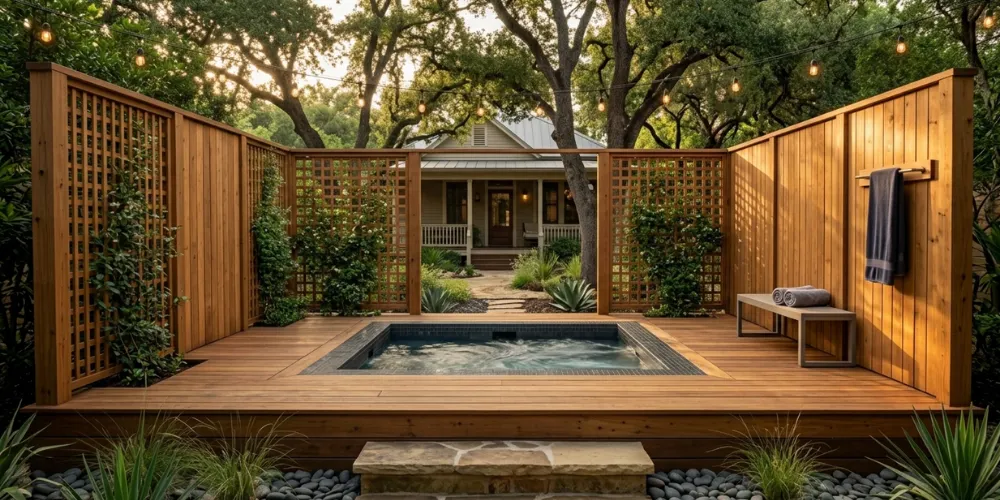
Build 6–8ft privacy walls on three sides of the hot tub using the same wood species as the decking. Leave the fourth side open to connect to the home or a view. Add climbing plants or lattice panels to soften the structure.
14. Pergola with Privacy Curtains
Adjustable Privacy | 4-Season | Elegant
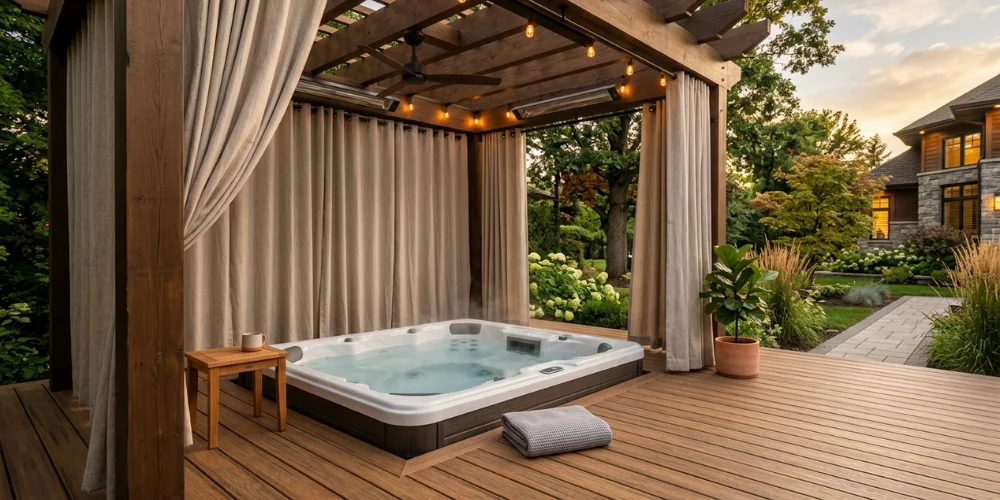
A sturdy wood or aluminum pergola over the hot tub, fitted with all-weather curtains on the sides, gives you adjustable privacy at any time. Open for a stargazing soak, closed for complete seclusion. A ceiling fan or electric heater extends usable seasons.
15. Corner Nook with Screening
Small Yards | Budget-Friendly | Private
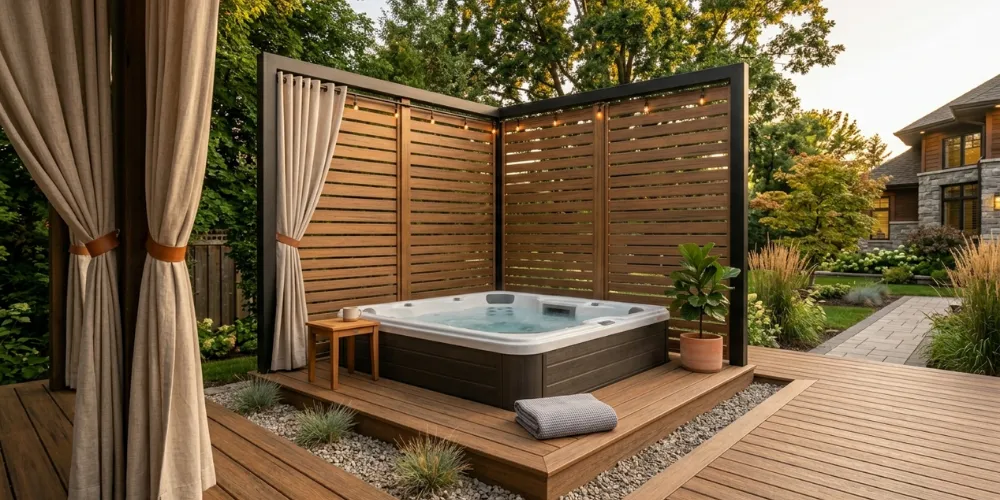
Tuck the hot tub into a backyard corner and build a low L-shaped privacy screen or decorative railing system around it. This is one of the most space-efficient and budget-friendly privacy solutions, perfect for smaller yards.
16. Fully Enclosed Hot Tub Pavilion Deck
4-Season | All-Weather | Luxury
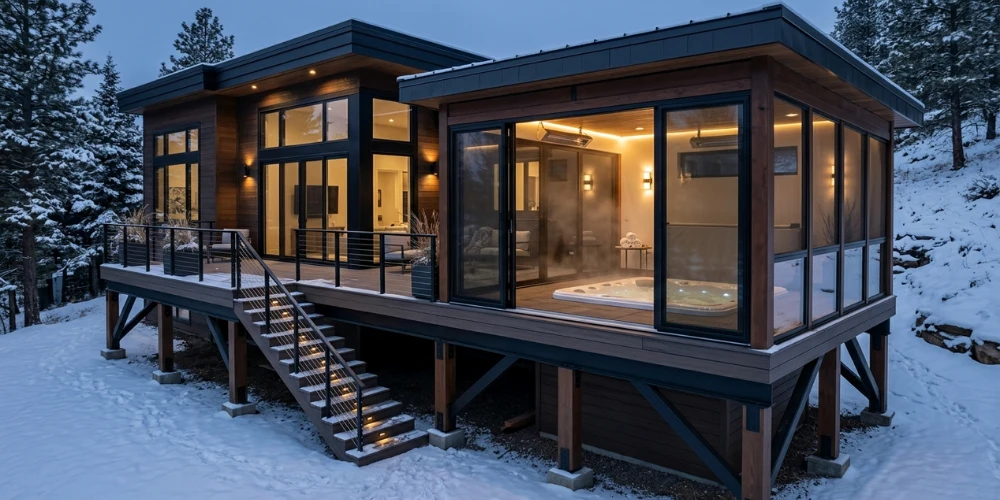
For true four-season use in colder climates, enclose the hot tub in a fully screened or glazed pavilion structure. Think of it as a dedicated spa room outdoors — protected from wind, snow, and rain while still feeling connected to nature.
Modern & Luxury Hot Tub Deck Ideas
For those who want their outdoor space to feel like a five-star spa, these contemporary designs combine premium materials, smart technology, and architectural precision.
17. Rooftop Deck Hot Tub
Urban Luxury | City Views | Showstopper
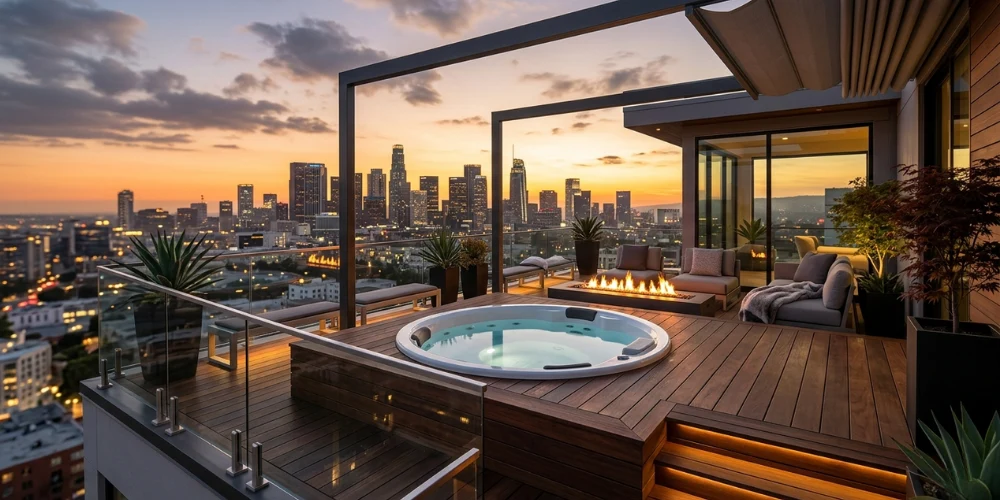
A rooftop hot tub deck is the ultimate urban luxury. Composite or tropical hardwood decking on a structurally reinforced rooftop, paired with frameless glass railings for unobstructed city or skyline views. Always requires a structural engineer.
18. Fire Pit + Hot Tub Combo Deck
Entertaining | Year-Round | Social
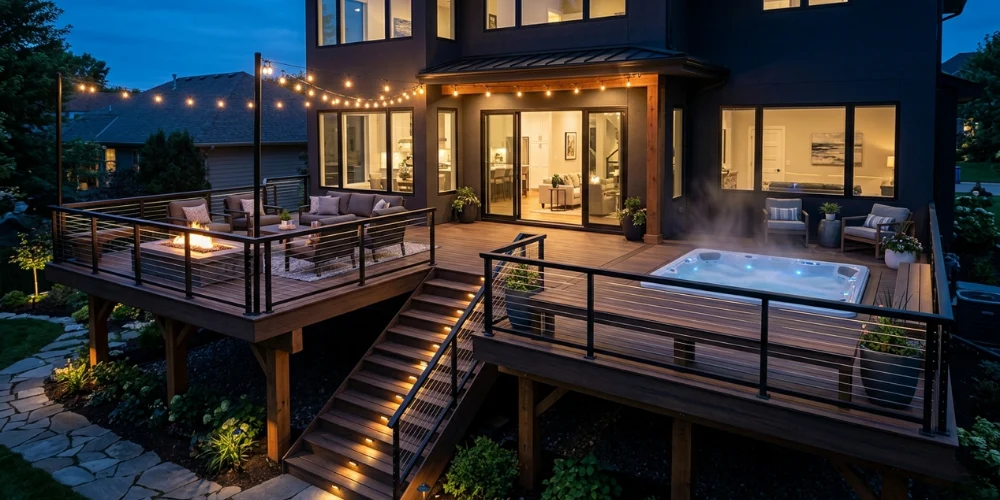
Position a built-in or portable fire pit at one end of the deck and the hot tub at the other, with generous seating between. The warmth of fire and water together creates an experience perfect for entertaining in cooler months.
19. Entertainment Deck with Outdoor TV
Entertainment | Tech-Forward | Social
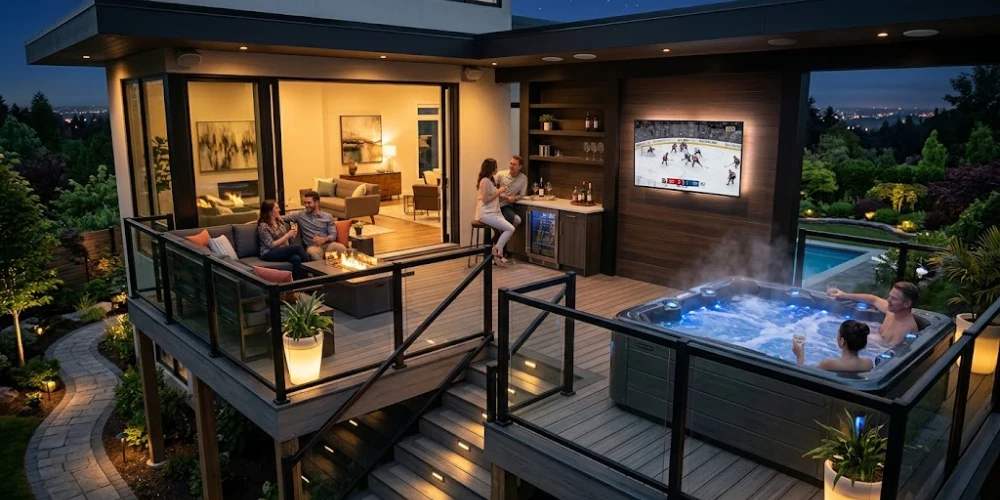
Mount a weatherproof outdoor TV or projector screen at eye level from inside the hot tub. Add a built-in Bluetooth speaker system, a wet bar or mini-fridge cabinet, and recessed lighting throughout.
20. Contrast Therapy Zone Deck
Wellness | Trending 2025 | Health
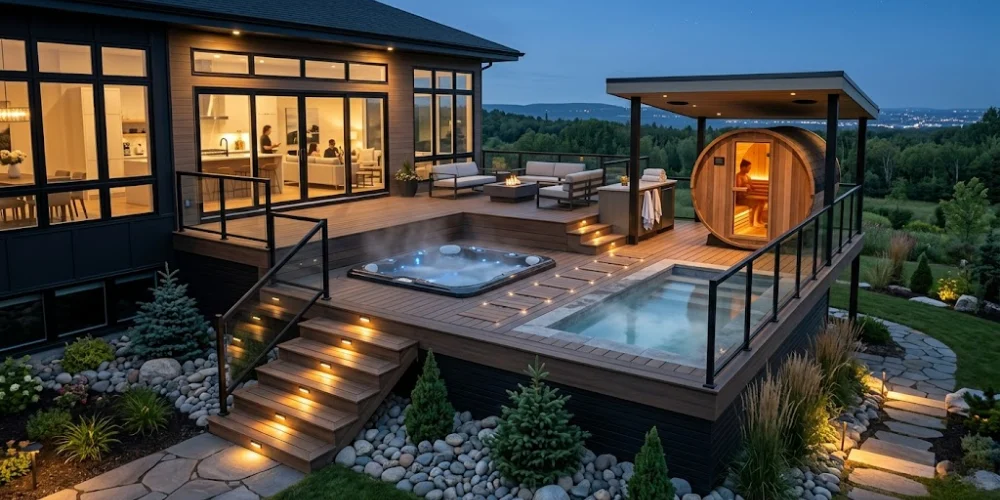
Design the deck as a full wellness circuit: hot tub, outdoor cold plunge pool, and a compact barrel sauna. This Nordic-inspired contrast therapy setup is surging in popularity in 2025 and creates a complete at-home spa experience.
Small Backyard & Budget Hot Tub Deck Ideas
Limited space or budget doesn’t mean limited style. These ideas prove that compact and affordable can still be absolutely beautiful.
21. Compact Courtyard Deck
Small Space | Cozy | Urban
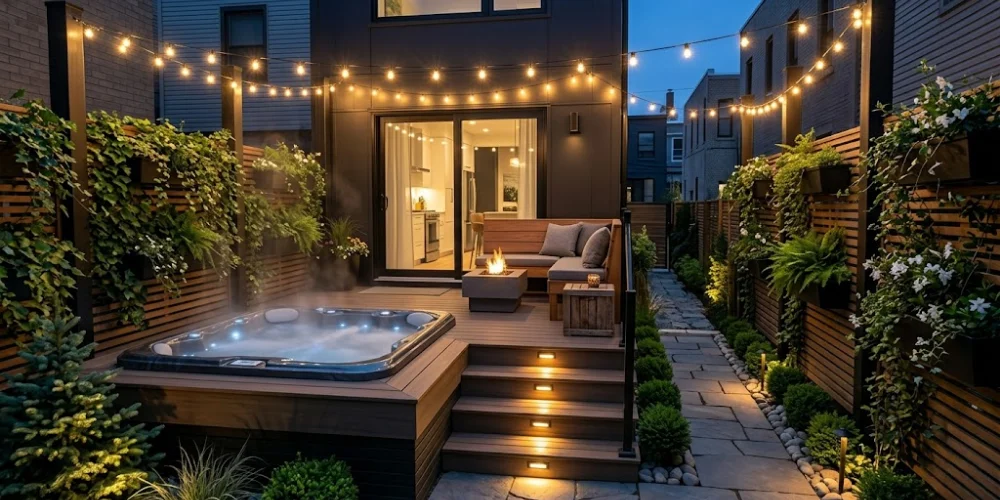
In a small courtyard or townhouse backyard, a 12x12ft platform deck with a 2-person hot tub, vertical planters, and string lights overhead can feel incredibly intimate and complete. Vertical space is your best friend in small areas.
22. Modular Composite Deck DIY
DIY | Weekend Build | Budget
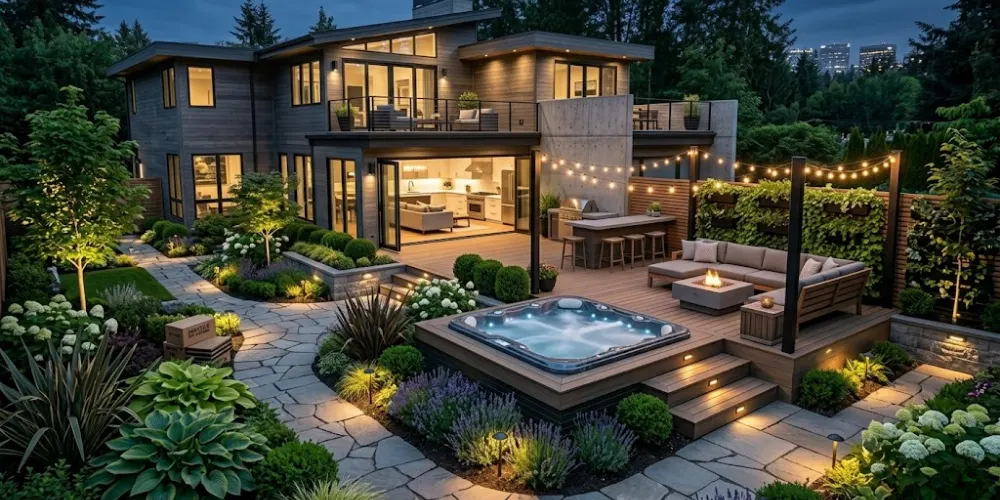
Pre-cut modular composite decking tiles allow a confident DIYer to build a clean, professional hot tub platform in a weekend. These interlocking systems sit on adjustable pedestals, require no fasteners, and can be reconfigured if you move.
23. Patio-Level Hot Tub Deck
Low Cost | Works with Existing Patio | Simple
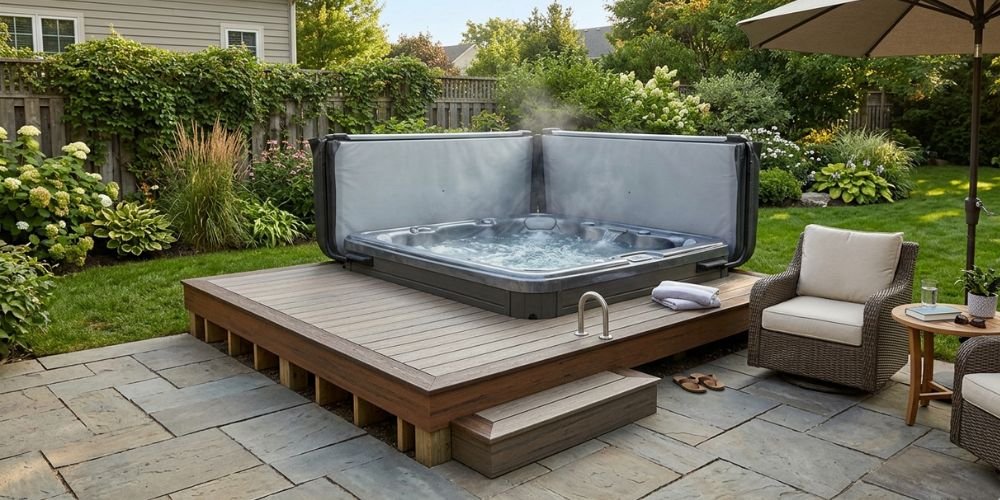
Build a small elevated deck (just 12–18 inches above grade) adjacent to an existing patio. The deck provides the hot tub’s structural platform while the surrounding patio gives you lounging space — without rebuilding your entire outdoor area.
24. Side-Yard Narrow Spa Deck
Side Yard | Hidden Gem | Unused Space
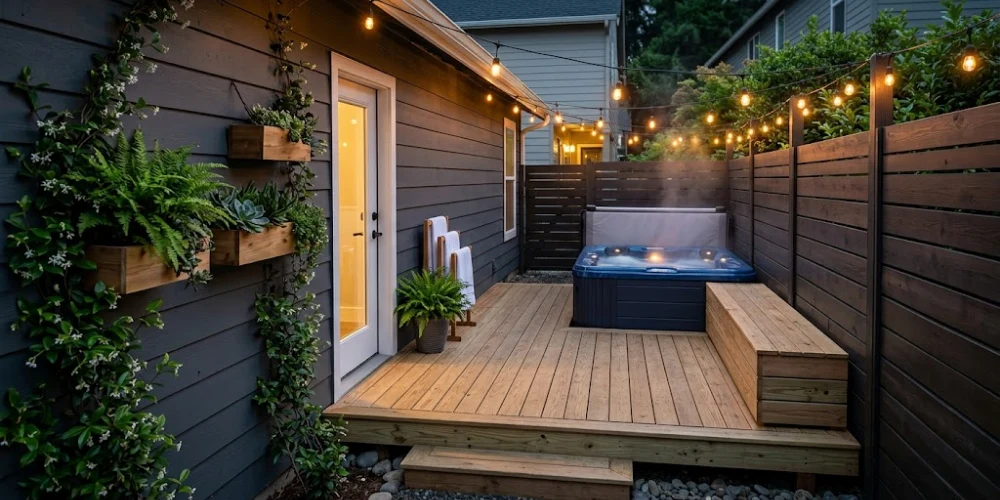
Many homes have an underutilized side yard — often just a grass corridor between the house and fence. With proper planning, a narrow 8–10ft wide deck with a 2-person hot tub, built-in bench, and overhead string lights can transform this dead space.
25. Stargazing Hot Tub Deck
Romantic | Simple | Nighttime Vibes
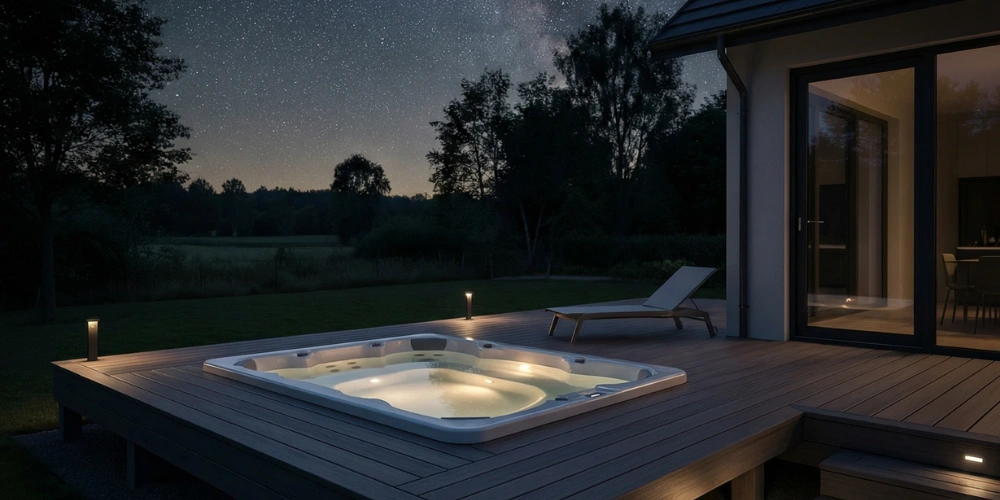
Optimize this simple design for nighttime use: a dark-toned composite deck, flush-inset hot tub, zero overhead obstruction, and only ground-level or underwater lighting so your eyes can dark-adjust to the stars. Add a reclining lounger for drying off.
Frequently Asked Questions
Can I put a hot tub on an existing deck?
Only with a structural engineer’s written approval. Most existing decks are not built to support the weight of a filled hot tub (5,000–6,000 lbs). You’ll likely need to reinforce the frame with additional beams and ensure the footings extend below the frost line. Never skip this step — structural failure under a hot tub can be catastrophic.
What is the best wood for a hot tub deck?
For natural wood, Ipe (Brazilian Walnut) is the top performer — it’s extremely dense, naturally resistant to moisture and rot, and can last 40+ years with proper maintenance. Teak and Cumaru are excellent alternatives. For low-maintenance, high-quality composite decking (Trex, TimberTech) is a smart choice that won’t warp, splinter, or need annual sealing.
How big should a hot tub deck be?
Plan for at least 36 inches of clearance on all sides of the hot tub for safe entry/exit and service access. A typical 7-person hot tub (roughly 7x7ft) needs a deck of at least 16x16ft to feel comfortable. If you want seating, dining, or other features, plan for 20x20ft or larger. Bigger is almost always better — you won’t regret the extra space.
Do I need a permit to build a hot tub deck?
In most municipalities in the US, yes. Decks above a certain height (often 30 inches) require a permit, and any electrical work for the hot tub also requires an electrical permit. Check with your local building department before starting. Building without permits can result in fines and complications when selling your home.
What is the cheapest way to build a hot tub deck?
The most budget-friendly approach is a ground-level pressure-treated platform deck that you build yourself. Ground-level decks have simpler structural requirements, fewer materials, and avoid some permitting complexity. Modular composite tile systems are another cost-effective DIY option. Budget $3,000–$6,000 for materials on a straightforward 16x16ft build.
How do I add privacy to my hot tub deck?
The most effective options are: (1) a pergola with all-weather curtains, (2) a wood privacy wall on one or more sides, (3) strategic dense plantings like arborvitae or bamboo, (4) a lattice screen with climbing plants, and (5) a full enclosure pavilion for maximum privacy. Privacy is easiest and cheapest to design into the original plan versus adding later.
Can I build a hot tub deck on a sloped yard?
Yes — and it can actually be an advantage. Sloped yards allow for multi-level decks that make the most of the grade change, with the hot tub on the elevated end and entertaining areas below. The substructure will be more complex (taller posts, more materials), so budget accordingly. A structural engineer is especially important for sloped-lot deck builds.
Final Thoughts
A hot tub deck is one of the highest-ROI improvements you can make to your home, not just in resale value, but in daily quality of life. The key is treating it as a complete outdoor living design project, not just ‘somewhere to put the tub.’
If your hot tub will be installed on a rooftop deck, don’t overlook the decking surface. Compare the best roof decking materials before choosing a material that can handle rooftop conditions.
Take your time with the planning phase, invest in quality materials, and don’t underestimate the structural requirements. Whether you go with a simple modular DIY platform or a full multi-level luxury installation, the result will be a space you use every single week for years to come.
Now go pick your favorite idea from the 25 above, share it with your contractor, and get started. The sooner you start planning, the sooner you’re soaking.
Ready to bring your dream deck to life? French’s Custom Outdoor Concepts specialises in custom-built decks designed around your space, style, and budget. Contact us today to start your project.